When choosing a ballet school franchise, don't be swayed solely by promised profits or a slick presentation.
A future partner is buying more than just a brand name on a sign; they are investing in an educational system, safety standards, marketing strategies, digital tools, team support, and the network's accumulated experience. The more robust this system is, the fewer challenges you'll face in reinventing the wheel after signing the agreement.
The question of 'which ballet school franchise to choose' might seem simple at first glance. The market features projects that sell brand usage rights but leave entrepreneurs to navigate premises, instructors, advertising, and daily operations entirely on their own.
There's another approach. A franchise can serve as a ready-made infrastructure, integrating methodology, school design, hall equipment, CRM, marketing, team training, parent engagement, and post-opening branch development.
Lil Ballerine embodies this latter format. The network isn't just developing a studio for hourly classes; it's building comprehensive children's ballet schools with unified educational and operational standards.
How to Choose a Ballet School Franchise and Avoid Mistakes
Before purchasing a franchise, you need to scrutinize seven key elements:
- How long has the network been established, and how many schools are actively operating?
- Does it have its own proprietary educational methodology?
- What are the standards for the premises, flooring, barres, and safety during classes?
- Who manages the marketing, and where do inquiries come in?
- What are the CRM capabilities, and can the owner see real-time performance metrics?
- Does the partner receive support after opening?
- Can you speak with existing franchisees?
Each of these points impacts not only the quality of instruction but also the business's financial viability. A weak methodology leads to lower student retention. An unsuitable space can erode parental trust. A poor CRM system results in lost leads. The absence of a supportive community forces owners to repeat common mistakes at their own expense.
Lil Ballerine Didn't Just Join the Market; It Shaped Its Standards
Lil Ballerine's journey began when ballet classes for young children were often offered as informal clubs, in rented spaces, or as programs for older children.
The network was among the first in Russia to systematically integrate:
- Classical dance training starting from age two;
- A proprietary age-specific methodology;
- Full-scale school facilities;
- A unified interior design and brand identity;
- Instructor training programs;
- Recital performances and educational progression milestones;
- Digital tracking of students and memberships;
- A scalable franchise model.
During its early development phase, the Lil Ballerine franchise network opened dozens of branches. External directories documented over 140 network locations across various years, and industry rankings recognized the project among leading Russian franchises.
Today, Lil Ballerine continues to evolve a model built not around renting a single studio but around a complete school experience and a child's long-term educational journey.
A crucial distinction: partners receive not a collection of disjointed instructions but a cohesive system that links the educational product, physical space, customer service, marketing, sales, and management.
Methodology for Children Aged Two and Up
Early childhood education cannot be delivered using a condensed program designed for older students. A two-year-old perceives speech, music, space, and movement differently. They have a limited attention span and should not be subjected to adult-level ballet training loads.
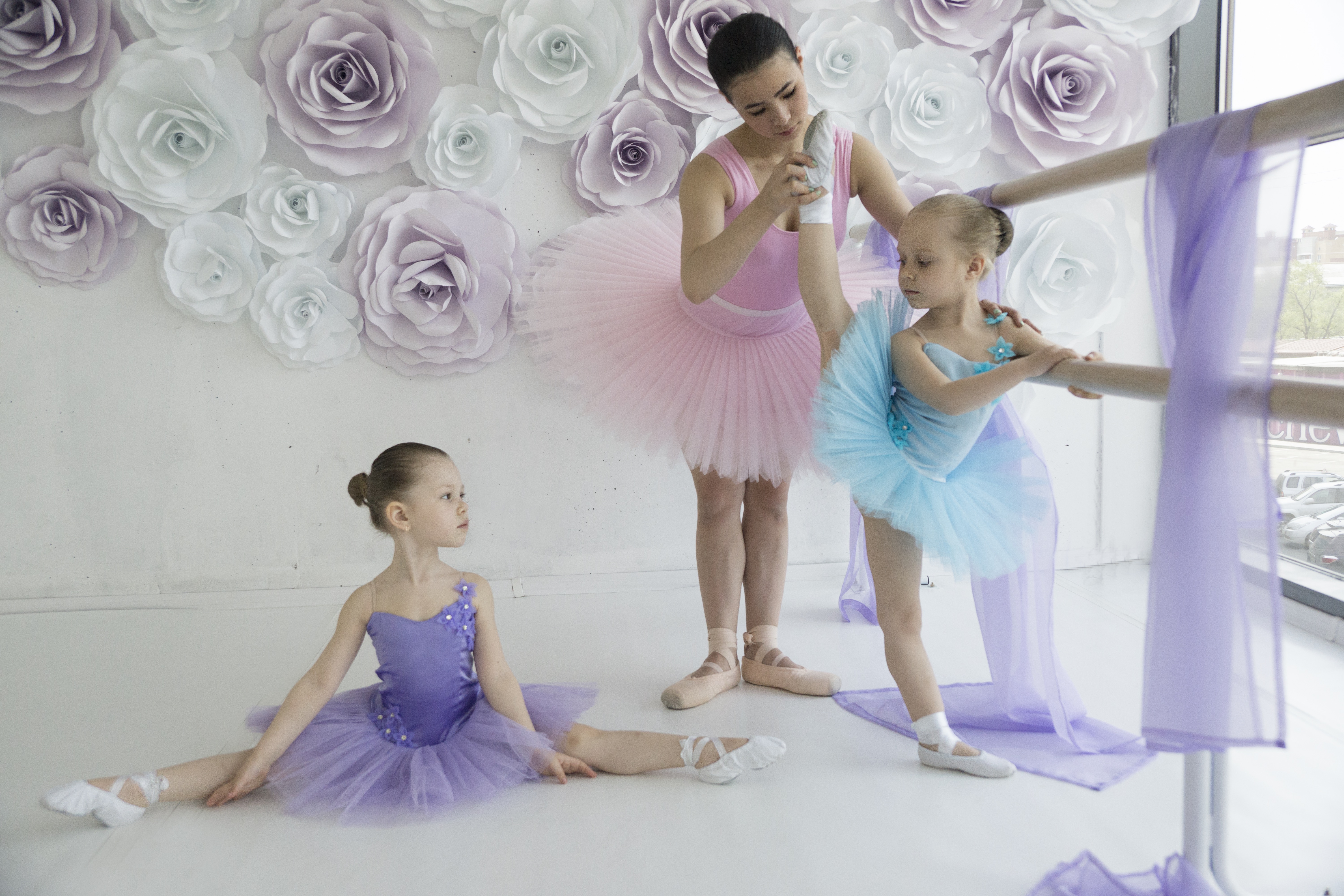
Lil Ballerine's proprietary "Ballet and Fairytale" methodology adapts the introduction to classical dance to the specific needs of young children. Ballet elements are intertwined with music, imaginative play, interactive tasks, and theatrical elements.
The program helps develop:
- Coordination;
- Musicality and sense of rhythm;
- Posture;
- Spatial awareness;
- Memory and attention span;
- Artistry;
- The ability to interact with an instructor and a group.
For a business, a strong methodology is as vital as it is for the child. When students eagerly attend classes, families are more inclined to continue their enrollment. Retention becomes a result of product quality, not perpetual discounts.
Educational License and Partner Support
The Lil Ballerine Management Company operates under a license for additional education for children and adults.
Licensee: LLC "RITM"
Registration Number: Л035-01298-77/02336221
Activity Type: Additional education for children and adults
The management company's own license does not replace the licensing requirements for the partner's legal entity. Therefore, the network assists franchisees in understanding whether their specific branch requires licensing, preparing the necessary documentation, developing educational programs, and navigating the required procedures.
For an entrepreneur, this is far more valuable than a general promise of "assistance with documents." In children's education, legal processes must be integrated into the business model from the outset.
School Interior Design Builds Parental Trust
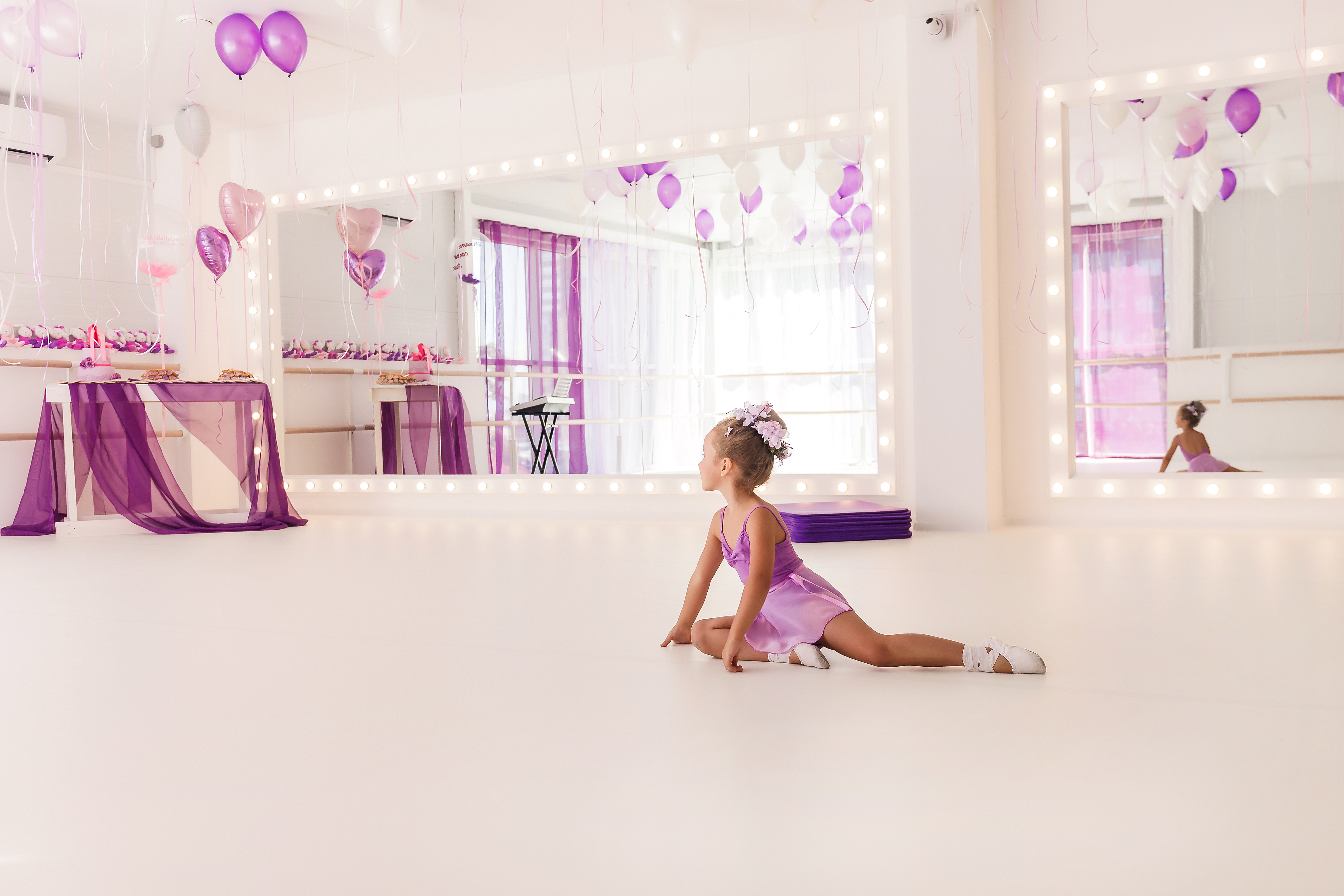
At Lil Ballerine, spaces are not decorated with random pink furniture and trinkets. The network's internal standards dictate that the concept for studios and common areas is developed considering child psychology, age-appropriate perception, and recommendations from child development specialists.
Color schemes, furniture design, equipment, signage, the height of specific elements, and spatial organization all serve multiple purposes:
- The child should feel calm and engaged;
- The space should not overwhelm their attention;
- Parents should perceive order and professionalism;
- Instructors need to easily supervise the group;
- Movement between the studio, changing rooms, and waiting areas should be intuitive;
- The interior should be consistently recognizable across different cities.
This creates the effect of a genuine network school. A parent visiting a Lil Ballerine branch in another city will recognize the same visual culture, spatial logic, and level of organization.
Live Video Streaming of Classes and Transparency in Education
Lil Ballerine was an early adopter in its niche, leveraging video as a key component in building trust between the school and families. Parents can observe the studio setup, class dynamics, instructor-child interactions, and student performances.
Video format addresses several objectives simultaneously:
- Reduces parental anxiety before the first class;
- Showcases the school's authentic atmosphere;
- Enhances the transparency of the instructor's role;
- Helps families track their child's progress;
- Generates high-quality content for the branch;
- Confirms that the advertising represents a functioning school.
Video is not merely a decorative element on the website; it serves as a tool for service, marketing, and quality control.
Ballet Flooring: Beyond Basic Laminate or Single-Layer Cushioning
The floor is a critical component of a ballet studio. Mistakes at this stage can compromise comfort, safety, and the longevity of the space.
Lil Ballerine's standards mandate a specialized floor construction. This is not simply a soft underlayment beneath a standard flooring material.
The system includes:
- A prepared and leveled subfloor;
- A structural layer for load distribution;
- A cushioning system;
- A specialized professional dance surface;
- Control over slip resistance and stability;
- Proper integration with walls and adjacent areas.
The precise configuration is tailored to the specific condition of the premises and the project scope. Partners receive detailed specifications and can manage the installation independently or utilize the network's trusted construction team.
Economizing on flooring is risky. A visually appealing surface without a properly constructed base does not constitute professional ballet flooring.
Barres, Mirrors, and Equipment Also Adhere to Standards
A ballet barre should not be selected based solely on appearance or low cost. Factors such as diameter, height, distance from the wall, mounting stability, material, and load-bearing capacity are crucial.
Lil Ballerine's standards consider:
- The age of the students;
- The height of the working line;
- Grip comfort;
- Spacing between structures;
- Secure fastening;
- Safe edges and joints;
- Mirror placement and instructor visibility.
Partners receive a brand book, technical specifications, and blueprints. They can arrange for custom fabrication, select a contractor, or leverage the network's bulk purchasing arrangements.
There is no requirement to purchase all furniture exclusively from the management company. The primary principle is adherence to unified quality and aesthetic standards.
Proprietary CRM: Managing the School within a Single Digital Ecosystem
A robust ballet school franchise should provide partners not only with methodological materials but also with tools for daily business management.
Lil Ballerine's CRM integrates the branch's core processes into a unified system.
Owners can monitor:
- New inquiries;
- Advertising sources;
- Trial class bookings;
- Lead processing status;
- Membership sales and renewals;
- Attendance and schedules;
- Group occupancy rates;
- Administrator performance;
- Instructor profiles;
- Financial and operational key performance indicators.
Branch websites, booking forms, chatbots, advertising campaigns, and end-to-end analytics are all linked to the CRM. Leads are not lost in the management company's ad accounts or reduced to impersonal figures in a report; they are directed to the partner and tracked through the entire sales funnel.
Digital services and a client portal are available for families. Separate roles and access levels are provided for staff. This approach is particularly beneficial for owners managing multiple schools and for investors who are not physically present at the branch daily.
CRM reduces business dependency on the memory of a single administrator. All critical actions are logged within the system and accessible to the owner.
Marketing Begins Before Opening
A common mistake for new children's centers is launching advertising campaigns only after renovations are complete. This often results in the newly opened school operating for weeks or months with an empty schedule.
At Lil Ballerine, marketing efforts commence immediately after the future branch's identification number is registered. The team collaborates with the partner to develop a strategy tailored to the city, district, location, renovation timeline, and budget.
The management company handles:
- Online advertising;
- Landing pages;
- Analytics;
- Chatbots and automation;
- Content and advertising materials;
- Tracking of lead sources;
- Campaign adjustments.
The partner is responsible for local promotion, community engagement, local partnerships, outdoor advertising materials, and prompt handling of inquiries.
The franchise agreement includes joint efforts for acquiring the first 100 clients and bookings. This is not merely a transfer of random contacts; leads are fed directly into the CRM and processed by the partner in conjunction with the network team.
Partner Community: Daily Collaboration, Not Just a Formal Chat
Lil Ballerine fosters a collaborative network where school owners regularly interact with each other and the management company.
The working community discusses:
- Advertising costs and cost per lead;
- Trial class conversion rates;
- Administrator performance;
- Recruitment and training of instructors;
- Events and recital planning;
- Licensing procedures;
- Grants and support programs;
- Renovations and equipment;
- Opening additional branches;
- Complex client and staff situations.
Partners are not left to fend for themselves after launch. They can consult with the network's marketing specialists, legal counsel, designers, methodologists, CRM experts, and other team members.
Collective experience is particularly valuable when facing a challenge that another branch has already successfully addressed. Instead of lengthy research, owners receive practical solutions from individuals operating within the same business model.
Partners Open Second, Third, and Fourth Branches
One of the most compelling indicators of a viable franchise is when existing partners continue to invest in the network.
Lil Ballerine has owners who manage two to four branches. They are fully aware of the real costs, seasonality, operational complexities, and the extent of support provided. The decision to open another school is based on practical experience, not just a presentation.
Prospective partners can request introductions to existing franchisees, view video testimonials, and ask direct questions:
- Did the launch budget align with the initial estimates?
- How was the initial enrollment process?
- What proved more challenging than anticipated?
- How effective is the post-opening support?
- What motivated the decision to open an additional branch?
- Would you purchase this franchise again?
Assistance with Premises and Turnkey Launch
A ballet school franchise should be capable of evaluating potential premises before a lease agreement is signed.
The Lil Ballerine team assists in assessing:
- The neighborhood's potential;
- The number of families with children in the area;
- Rental costs relative to potential revenue;
- Floor plan suitability;
- Usable square footage;
- Ventilation systems;
- Floor condition;
- Feasibility of installing barres and mirrors;
- Layout of changing rooms and waiting areas;
- Estimated costs for site preparation.
Partners can manage renovations independently, following the brand book and technical documentation. A turnkey launch option is also available, involving the network's vetted construction team.
The freedom to choose your own contractor is maintained. However, adherence to unified standards is mandatory, as these protect brand quality and student safety.
How to Vet the Lil Ballerine Franchise Before Purchase
A strong franchise should welcome scrutiny. Before signing the agreement, prospective partners should:
✓ Review the current franchise agreement.
✓ Verify the trademark and operating license.
✓ Examine the financial model specific to your city.
✓ Request detailed requirements for the premises and flooring.
✓ Review the brand book and equipment standards.
✓ See the CRM system in action.
✓ Confirm where advertising leads are directed.
✓ Speak with several existing partners.
✓ Visit a branch or conduct a video meeting.
✓ Understand the support provided post-launch.
Who is the Lil Ballerine Franchise Suitable For?
This model is ideal for entrepreneurs who wish to:
- Open a fully-fledged children's ballet school;
- Work with children aged two and up;
- Utilize a proven educational methodology;
- Benefit from a well-developed design and technical standards;
- Manage the school through CRM and analytics;
- Receive expert support;
- Join an active partner community;
- Potentially open multiple branches in the future.
Lil Ballerine is not suitable for individuals seeking a completely passive income. Owners must actively oversee their team, participate in local marketing efforts, ensure service quality, and adhere to network standards.
Ultimately, Which Ballet School Franchise Should You Choose?
Select a franchise that can demonstrate a functioning system, not just promises.
Verify if it possesses:
- A history and operational branches;
- Its own proprietary methodology;
- Educational and legal foundations;
- Standards for flooring, barres, mirrors, and interior design;
- A CRM system and end-to-end analytics;
- Pre-opening marketing strategies;
- A genuine partner community;
- Post-launch support;
- The opportunity for direct conversation with franchisees.
Lil Ballerine was conceived as a complete dream school for children, not merely a collection of classes in a rented space. Over years of operation, this vision has evolved into a comprehensive system encompassing methodology, licensing, a unified environment, digital management, and a supportive partner network.
The fundamental rule of selection is simple: invest in verifiable business infrastructure, not just an attractive presentation.